
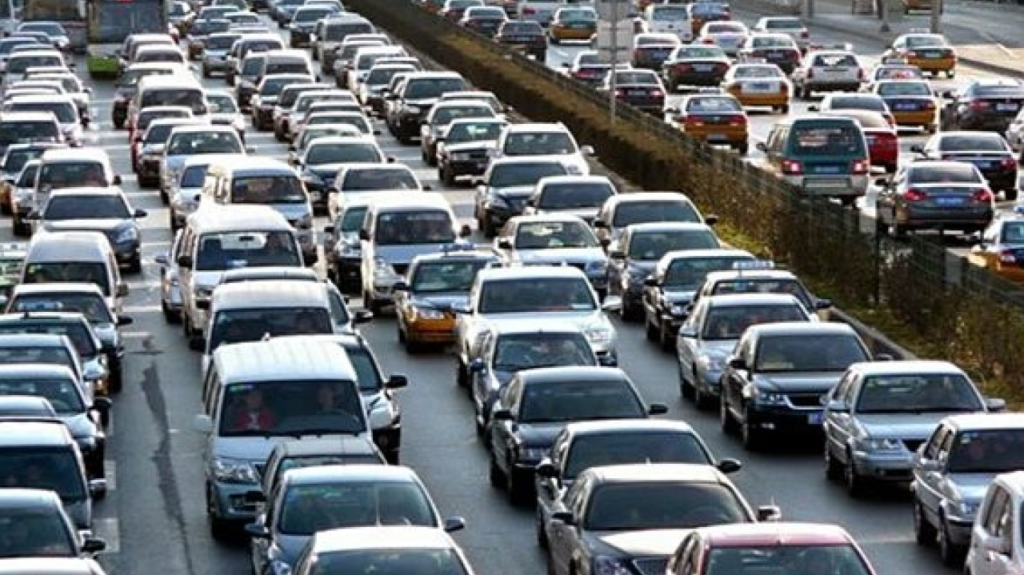
Many things have changed in my life since I relocated from Bangalore, India to here in California, USA. What has not changed, however, is the traffic. It remains as bad as I have seen in other cities. Initially I failed to understand that why despite California having a much bigger network of roads, freeways, traffic rules, almost 100% working signals goes through the same fate as Bangalore in terms of traffic. Doing further research, I found that there are few fundamentals that almost all the policy makers in different countries miss out. For a simple explanation and better understanding, I have encapsulated those fundamentals in three simple laws. Let’s have a look-
1. Building more loads lead to more congestion
However counter intuitive it many sound, this law can be explained easily. As the population of a city grows, policy makers and local governments start the processing of widening the lanes and building more roads. This brings relief for some time. However, very soon, the improved infrastructure gives rise to more economic activity and more people move in to enjoy the benefits of a more vibrant economy. They bring more cars on the roads. Even the people already living there can afford to move from public transport or 2 wheelers to 4 wheelers. This adds more vehicles on the road. Very soon, the roads gets crammed again and what we are left with is more congestion proving my first law of slow motion.
2. The speed of building metros/subways is directly proportional to the duration for which it bring relief.
Cities across the globe have resorted to building subways/metros and other transport systems to ease the pressure on roads. Delhi, Bangalore, London, New York etc. are some notable examples.
However, most of these cities have taken time in building these infrastructure and that’s where the problem lies. My second law of slow motion states that this speed is directly proportional to the anticipated relief period. This means that the more is the speed of building these infrastructure, the more time people can enjoy the benefits of an improved transportation system. This is simple to explain. As soon a subway or metro system is announced on a particular section, the real estate prices jump there immediately. Builders start constructing huge residential and commercial complexes on these routes. These projects normally take around 3-5 years to complete. The same is time required to build these complex transportation networks also. The end result is that by the time, these metros/subways are opened for public use, there are already so many people either residing or doing commercial activities on these routes that traffic situation just remains the same. Anybody who have lived in Delhi and Bangalore will immediately connect with this law. If we want to enjoy the benefits of a new metro/subway system, the trick is to build these in record low periods so that benefits can be enjoyed for much longer duration.
3. All actions in this field are always reactive, not pro-active.
If you are asked to name a city which could predict its congestion in advance and was prepared for it beforehand, you will struggle for answers. This brings me to my third law that states that all actions in solving congestion issues are always reactive, not pro-active. Did Delhi start building its metro in anticipation of a larger traffic on its roads? No they did it, because Delhi roads were already choked. Bangalore started the metro projects only when its roads became undriveable. Same is with New York, London and most other cities across the globe. Even Google and other companies are experimenting with driverless cars only because nobody wants to drive on these choked roads. It’s another matter that these experiments are just a means of showing the technical prowess and does not have any serious intention of solving congestion problems.
If we accept these three basic laws of slow motion (Congestion), then only we will be able to think beyond and find some real solutions. Otherwise, the 3rd law of slow motion will continue ruling this field for a long long time.